Listing sites help guests find you. Your own website is where they book with you, come back again and send their friends. No commission, no set fields and no one else’s rules.
New direct booking3 nights · Millie the Hut£0 commission
The short version.
Your own website lets guests book with you directly, so you keep the commission a listing site would take. It’s there when people search your name, it gives you one link to share everywhere, and it’s yours to shape and keep. Most owners keep their listings too. The website is where guests come back to.
Listing sites and agencies take roughly 15% to 25% of every booking. When a guest books on your own website and pays by bank transfer, you keep all of it. If you take cards, there’s just a small card fee.
It adds up quickly. Over a season, the commission on a busy hut can be worth more than the website costs for years.
One booking, two routesA three-night stay at £120 a night
Booked through a listing site 20% commission
You keep £288Commission £72
Booked on your own website Paid by bank transfer
You keep £360No fees
£72 more in your pocket, from one booking.
£3,000+ saved on commission by Millie the Hut in its first year, from 42 direct bookings. Read the story
Listing commission based on Canopy & Stars at 20%. Taking card payments on your own site adds a small fee, usually around 2%.
02
People search
Be there when guests look you up.
Guests often find you on a directory, then search your name to see more. Some want a better deal, some want to book with the owner, and some just want a proper look before they commit.
If your own website comes up, they can book with you. If it doesn’t, they go back to the listing and book there, commission and all.
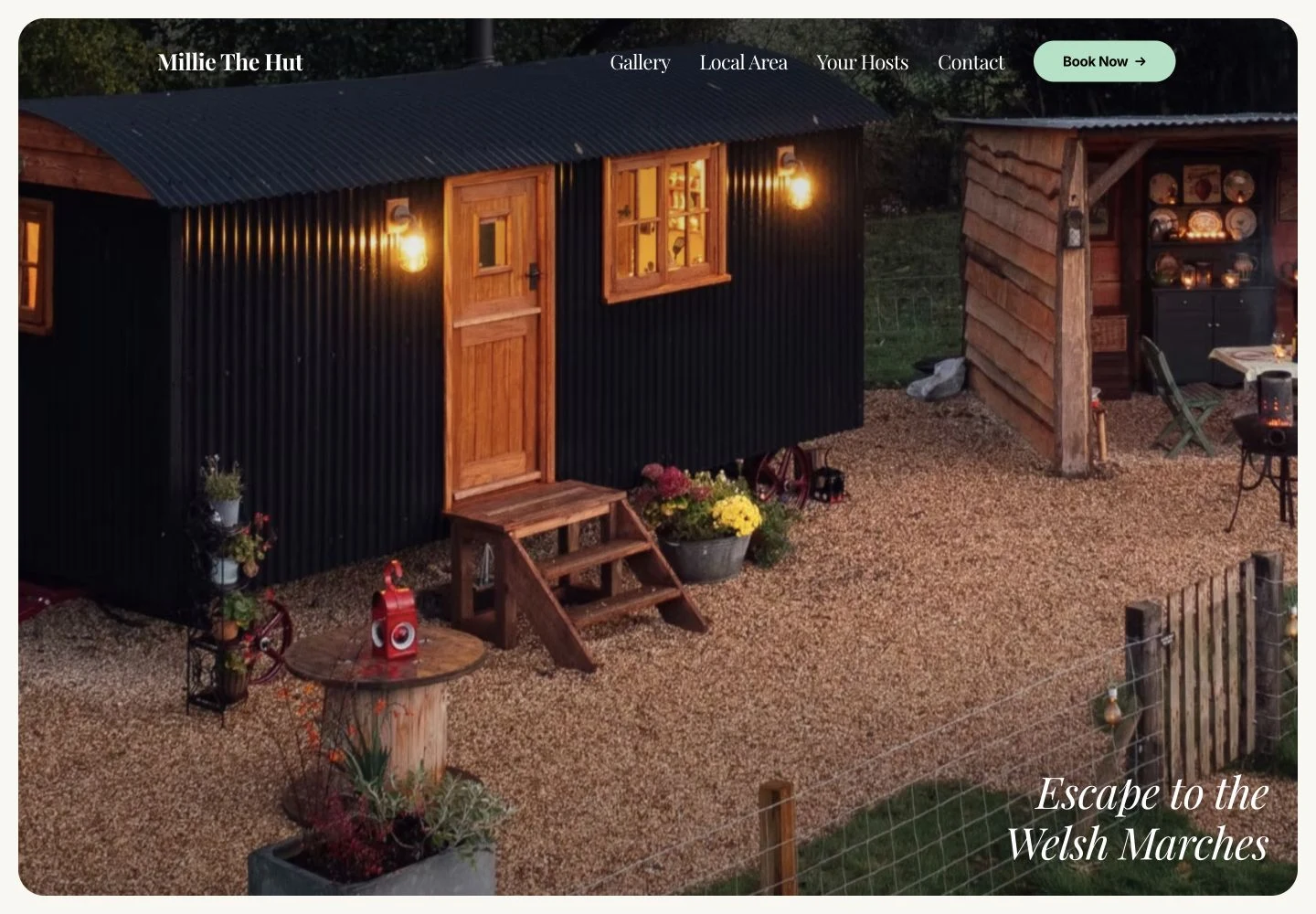
milliethehut.co.ukMillie the Hut · Shepherd’s hut in the Welsh MarchesCheck dates and book direct. Local walks, stargazing and the best pub nearby.Your website
Maps · Millie the HutShepherd’s hut · Website · Directions
canopyandstars.co.ukMillie the Hut · Canopy & Stars
An example of what guests see when your own website is set up to be found.
03
Somewhere to send people
One link for everywhere.
Your Instagram bio, your Facebook page, Google Maps, the local tourism site and the blogger who stayed last summer can all point to one place where guests can book with you.
Word of mouth works the same way. “Just search Millie the Hut” is easy to pass on, and easy to book from when there’s a website at the end of it.
Instagram, Facebook, Google Maps, word of mouth, returning guests, local tourism sites, press and directories all lead to your own website.
04
Your words, your way
Room to tell the whole story.
Directories give every place the same boxes to fill in. A title, a description, a list of amenities to tick. It’s hard to show what makes yours special when it looks like every other listing on the page.
On your own website, there’s room for all of it. The walk to the village pub, the field where you can see the Milky Way, the breakfast hampers, the farm shop down the lane and how to find you when the satnav gives up. That’s the stuff guests fall for, and it’s what helps you turn up in searches for your area too.
TitleShepherd’s hut, sleeps 2TypeShepherd’s hut ▾Amenities☑ Wi-Fi ☑ Parking ☐ Hot tubDescription
Your own website
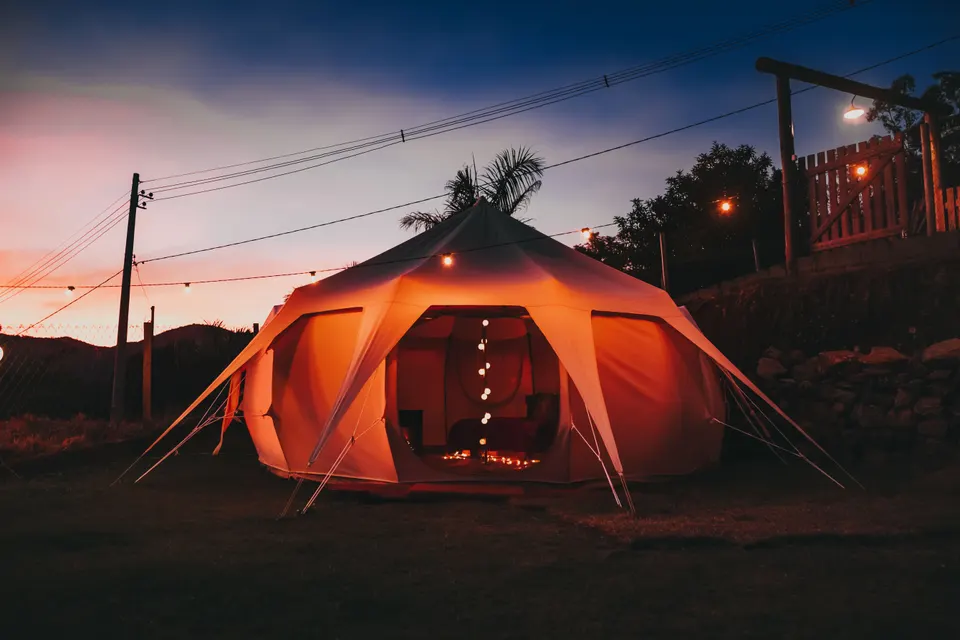
Golden evenings, under canvas.
The walk to the pub
Stargazing field
Breakfast hampers
Dogs welcome
Getting here
Set fields, same as everyone, beside a page that’s all yours.
05
Long-term ownership
Yours for the long run.
A listing is rented space. Platforms change their fees, their search rankings and their rules, and you have no say in it. Your website is the part of your business that nobody else controls.
It grows in value too. The longer it’s live, the more it shows up in searches, and the more of your guests book with you. That’s money you keep, year after year.
Your domain is yours to keep, whoever builds or hosts the site. Put it on your cards, your welcome book and your van.
Your guests
Direct guests are your guests. You can thank them, send an offer for a quiet week and invite them back.
Your rules and prices
Set the minimum stay, deposits, a better rate for returning guests and a cancellation policy that suits you.
Your place on Google
Every page, review and mention builds up over the years. It stays with your site, not with a listing you might move on from.
You don’t have to choose
A listing finds the guest. A website keeps them.
Keep the listing sites that bring you new guests. Your website sits alongside them, with the same dates on a synced calendar, and gives every guest a way to come back to you directly.
A warm, welcoming website with local tips and a simple booking calendar. A new way for guests to book direct, alongside Millie’s Canopy & Stars listing.
A website is worth it when the commission it saves is bigger than what it costs. Here is the sum, with real examples.
7 min read
Frequently asked questions.
Do I need a website if I’m already on Airbnb or Canopy & Stars?+
You don’t have to choose. Listing sites are good at putting your place in front of new guests. Your own website is where those guests go when they search your name, want to know more or come back for another stay. It lets them book with you without a listing site taking commission.
Will guests really book on my website instead of a listing?+
Many will, especially returning guests and people who found you through friends, social media or a local guide. Lots of guests look a place up by name after seeing it on a listing. If your website is there and booking is easy, they can book with you directly. Millie the Hut took 42 direct bookings in its first year.
Can I put my website link on my Airbnb listing?+
Usually not. Airbnb and most booking platforms don’t allow links or contact details in listings. That’s why it matters that guests can find your website when they search your name, and why it helps to share your link everywhere else: social media, Google Maps, local tourism sites, your welcome book and anywhere that writes about you.
How much does a website cost compared with commission?+
Plans start at £19 a month per property. On a £360 stay, a 20% listing commission is £72. Booked direct and paid by bank transfer, you keep all of it, and taking cards only adds a small fee of around 2%. A handful of direct bookings a year usually covers the cost of the website.
I don’t have time to run a website. Is it still worth it?+
That’s what I’m here for. I design and build the site, help with the words and keep it up to date. Basic updates are included in every plan, so you send over new photos or changes and I take care of them.
How quickly will my website start bringing in bookings?+
Searches for your own name tend to come first, often within weeks of going live. Wider searches, like glamping near a town, take longer and grow as the site builds trust. Sharing your link from day one helps a lot.
Free website audit
Is your website winning bookings?
Send me your website and I’ll tell you, for free, what’s stopping it getting bookings.

 Golden evenings, under canvas.